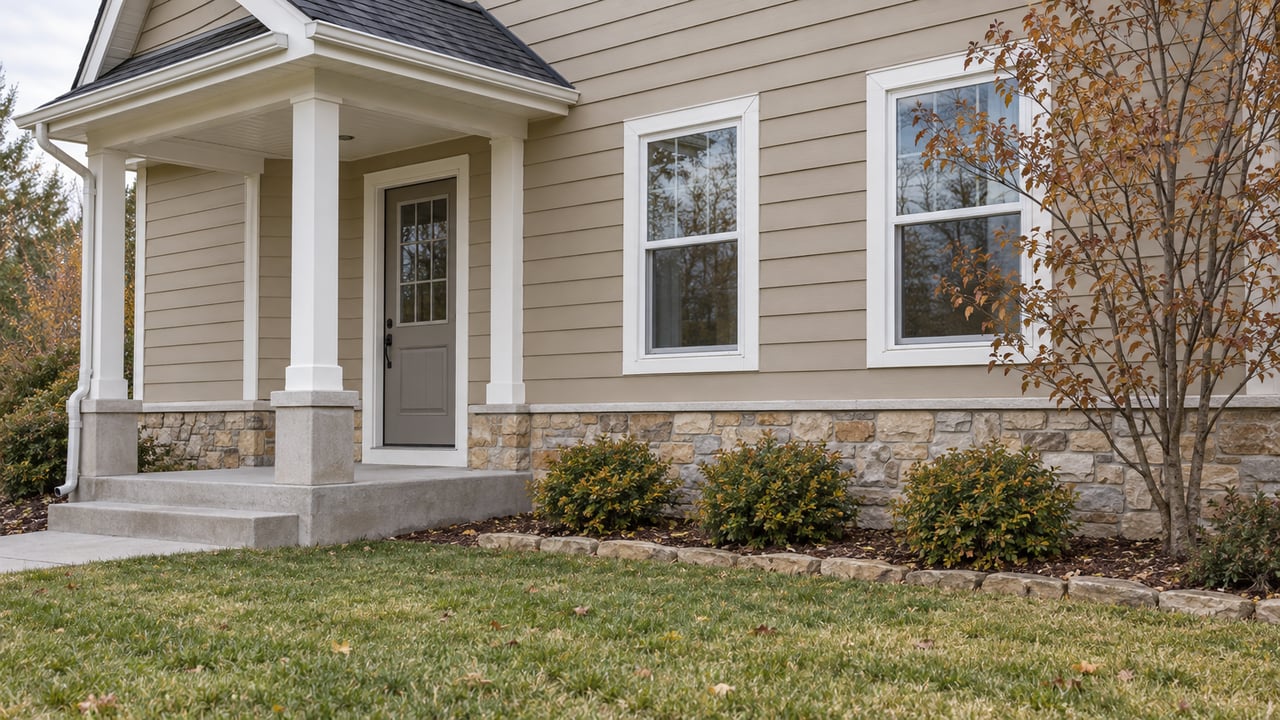
Evanston Now Allows Backyard Cottages and Basement Apartments. Who Can Actually Build One?
October 15, 2026
October 15, 2026
If you buy a house in Evanston this fall planning to add a backyard cottage or a basement apartment, you can't apply for the permit until a full year after you move in and make it your primary residence. The city's first accessory dwelling unit ordinance requires the owner to live in the main house as a primary residence for one continuous year before submitting a building permit application, and a conditional use permit application where one is required.
That one rule shapes almost everything else about how ADUs work here. On paper, Ordinance 26-01 looks like a new housing and rental-income tool for the whole city. In practice, it mostly helps people who already own and live in a detached single-family home in the right zoning district. For buyers, the rule changes how you should value a house's "in-law potential" before you write an offer.
The City Council passed the ordinance on third and final reading on March 3, 2026, with seven yes votes. It took effect on passage. Here's the order of events for someone buying a house today with plans to add a unit:
A buyer shopping for an investment property can't run that sequence at all. A buyer planning to live in the home can, but has to plan for a year of living in the house as it stands, plus permitting and construction. A homeowner who has already lived in their house for more than a year has none of that wait. That's the group the ordinance serves on day one.
The city's own reasoning fits this reading. The ordinance's opening recitals say Evanston's Comprehensive Plan called for ADUs on lots with a primary residence, used "as guest housing or as living space for family members, typically seniors," and also noted that ADUs may generate rental income. Rental income is allowed. It just comes with the owner living on the property.
Once the clock is running, the next filter is the property's zoning district. Lot size comes later. The ordinance added an ADU line to the city's residential land-use table. ADUs are allowed only on lots with a detached single-family home, and they're prohibited on lots with attached single-family homes or multifamily buildings.
| Residential district | ADU status under the March 2026 ordinance |
|---|---|
| Low Density Residential (LR) | Conditional use review |
| Low Density Residential-Mixed (LR-M) | Conditional use review |
| Rural Residential (RR) | Permitted, subject to the ADU standards |
| Medium Density Residential (MR) | Prohibited |
| High Density Residential (HR) | Prohibited |
So a detached house in a medium-density district can't add an ADU, even with plenty of yard. Meanwhile, a Rural Residential property skips the conditional use hearing entirely. The density districts already built for more housing are the ones closed to this kind of housing. The column labels in the published table are hard to read in the scanned minutes, so confirm a specific property's district and status with the city before you count on either answer.
Lot size still matters in the districts where ADUs are allowed. The lot has to meet the district's minimum lot area, or keep the required usable open space per dwelling unit once the ADU is added.
The size rules favor finishing a basement over building in the backyard. A detached ADU can't be larger than 50 percent of the main house's footprint or 1,200 square feet, whichever is smaller, and no smaller than 190 square feet. Garages, porches and decks attached to the main house don't count toward that footprint. All accessory buildings together, including a detached ADU, can't exceed 75 percent of the main house's footprint.
Basements are exempt from the size cap. Under the ordinance, an ADU "may occupy the entire floor area of a basement."
Here's what that means for a house with a 1,400-square-foot footprint. A detached cottage tops out at 700 square feet, and less if a detached garage or shed already uses up part of the 75 percent allowance. A full basement under the same house could hold a unit roughly twice that size. If an existing garage already eats into the accessory-building allowance, the basement may be the only realistic option.
The other standards apply no matter where the unit goes:
The single-meter rule affects the numbers on any rental plan. Because the code allows one bill per meter on shared service, the owner of the main house is likely to be the one holding the utility account for both units.
The recorded notice is where the ordinance stops being one owner's project and becomes part of the property. An ADU can't be subdivided, held under separate ownership from the main house, or reclassified as a principal use of the lot. The owner-occupancy requirement applies to "the owner of the property," not just the person who built the unit. And the Notice of Accessory Dwelling Unit Regulations sits in the county records along with the legal description.
Starting in 2026 or 2027, some Evanston listings will include a permitted ADU. A buyer considering one of those homes is buying a house where, under the code, the ADU can be occupied only while the owner lives on the property. A buyer who plans to rent out both units and live somewhere else is looking at a property that doesn't work that way under the ordinance. Sellers should expect the buyer pool for an ADU property to be people who plan to live there. The notice gives a buyer's title review a clear record to find.
Occupancy rules changed once during the council process. The first-reading version limited an ADU to one family, as the code defines the term. At the February 17 meeting, the council took up an amendment to that subsection. The final text keeps that definition and adds that an employed non-family member may stay in the unit "on a temporary or intermittent basis so as to provide caretaking services for a member of the occupant's family." For a household planning around an aging parent, that's the change that matters most.
The ordinance didn't come out of nowhere. The Planning and Zoning Commission held several hearings on ADUs during 2025 before sending its recommendation to the council. The Uinta County Herald covered a council discussion of ADU code changes in December 2025. The adopted text later ran in the Herald's March 12, 2026 legal notices.
Since then, Planning and Zoning Commission minutes for March 2, July 6 and August 3, 2026 don't show an ADU conditional use case. That doesn't prove none have been filed. Rural Residential ADUs don't need a commission hearing, and building permits don't appear in those minutes. Still, through August 2026 there's no sign in the commission records of a rush to use the new rule. Even owners who already meet the one-year requirement still have to work through district, size, parking and utility rules before they can build.
Can I rent an ADU on a short-term basis? The ordinance doesn't mention short-term rentals one way or the other. The owner-occupancy and one-family occupancy rules still apply to the unit. Ask the City Engineering and Planning Department how those rules apply to a specific short-term plan before you count on that income.
Does an ADU need a hearing? In the LR and LR-M districts, it goes through conditional use review. In Rural Residential, it's a permitted use as long as it meets the standards.
Can I sell the ADU separately later? No. The code prohibits subdividing the unit or holding it under separate ownership from the main house.
Can a townhome or condo owner add one? No. ADUs are prohibited on lots with attached single-family homes or multifamily buildings.
If an ADU is part of why you want a particular house, check the zoning district, the basement and the garage footprint before you write an offer. Britany Erickson can help you sort that out early, whether you're buying with a future unit in mind or selling a home that already has one. Text or call Britany at (307) 799-8096 to discuss your next move.
This article is general information, not legal, tax or financial advice. Consult a qualified professional about your situation.

Prime Campgrounds for Your Next Outdoor Adventure.

These Are Ideal Options for Families Dining Out in Evanston.
What to Accentuate and Promote When Selling in Wyoming.
The Strategies and Qualities to Seek in a Competent Agent.

Your Guide to Skiing Near Evanston, Wyoming, From Park City Slopes to Uinta Trails.
Experience seamless real estate transactions with Britany Erickson. From buying to selling, Britany's commitment to exceptional service ensures a successful outcome. Trust in her local knowledge and expertise to simplify your real estate journey and maximize the value of your investment.