Evanston Commercial Real Estate Basics For Local Owners
July 23, 2026
July 23, 2026
If you own a local business or are thinking about opening one, commercial real estate in Evanston can feel simple at first glance and complicated once you start comparing spaces. You want a location that fits your business, your budget, and your long-term plans, but small details like zoning, lease terms, and buildout costs can change the whole picture. This guide breaks down the basics so you can make a more confident decision in Evanston. Let’s dive in.
Evanston is a small market, but it has several traits that make it workable for local business owners. The U.S. Census Bureau reports a 2020 population of 11,747 and a July 2025 estimate of 11,705, which points to a stable local base rather than a boom-and-bust environment.
That stability matters when you are choosing a storefront, office, or service location. The city also reported a 71.3% owner-occupied housing rate and median household income of $76,516 in 2020-2024 ACS data, which helps paint a picture of an established community with long-term residents.
There is also real consumer activity here. In 2022, Evanston posted $494.2 million in total retail sales and $36.4 million in accommodation and food services sales, showing that local spending is meaningful for a market of this size.
Location is another big advantage. City business information highlights Evanston’s position along Interstate 80 and the Union Pacific Railroad mainline, along with a low-tax, business-friendly environment. For many owners, that combination supports both local access and regional connectivity.
Not every part of town serves the same business need. In Evanston, commercial activity tends to cluster in a few key areas, and the right fit often depends on how your customers find you.
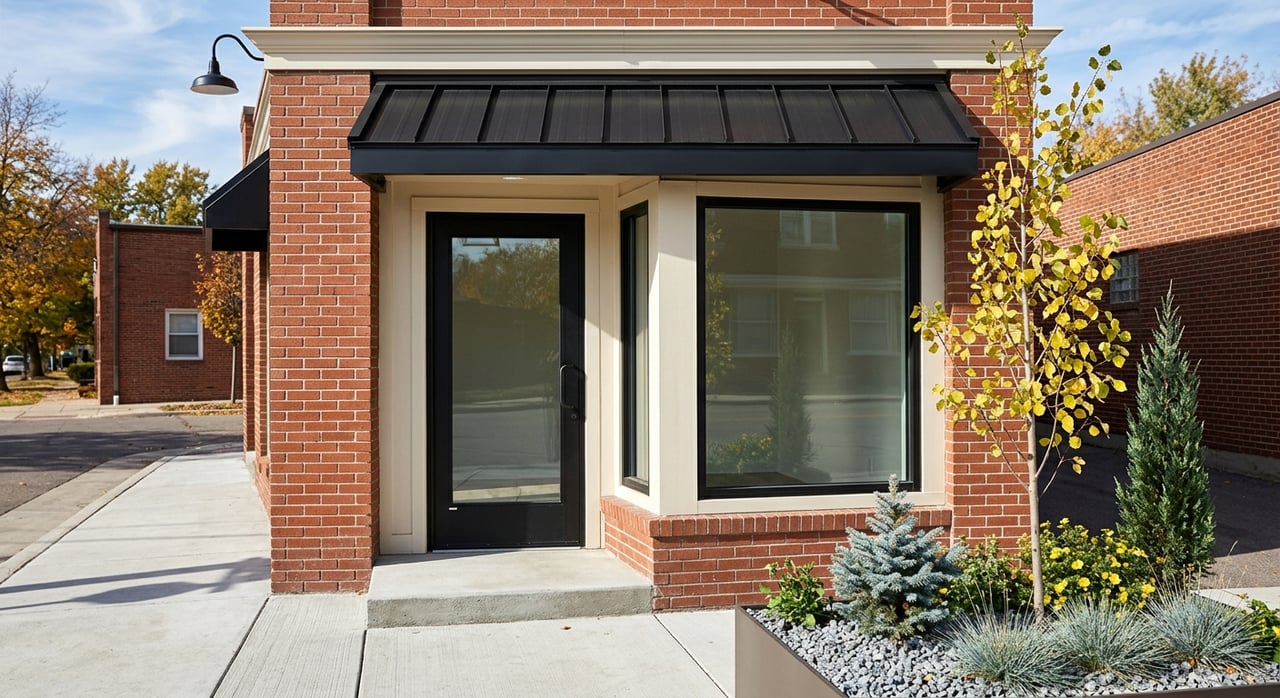
Downtown is one of the clearest options for businesses that benefit from visibility, walk-in traffic, and a recognizable central location. The city’s Urban Renewal and Main Street program describes downtown as a vibrant business district with shopping opportunities.
The city’s comprehensive plan describes the Downtown and Front Street area as a regional business area where specialty businesses, eateries, lounges, banking services, entertainment, offices, and residential lofts predominate. If you are looking at a retail shop, restaurant concept, or smaller office with a customer-facing presence, this area is often the first place to consider.
Some businesses need easy vehicle access more than downtown foot traffic. City planning materials identify Front Street, Highway 89 North, Bear River Drive, and Harrison Drive as important commercial nodes.
The comprehensive plan notes that the north side of Front Street includes larger retail and service uses such as Gateway Mall, fast-food businesses, a restaurant and service station, Walmart, Anderson Lumber, IGA, and a vehicle dealership. For service businesses, convenience retail, and uses that depend on parking and quick access, these corridors may offer a better match.
If your needs include storage, fabrication, light manufacturing, rail access, or larger equipment, industrial space deserves a separate search. Evanston’s Union Center Business Park is one of the clearest starting points because the city says several acres are ready for development, the lots are zoned light industrial, utilities are available or can be extended, and the site is near Union Pacific rail service.
The city also references the Evanston Industrial Center, Evanston Rail Center, Sunset Industrial Park, and Evanston Valley Business Park. That tells you industrial and flex opportunities are not limited to one single site.
Office users usually have more flexibility than retail or industrial users. The comprehensive plan says offices are appropriate in the downtown business center, especially above or below ground-floor retail in multi-story buildings or near the edge of downtown as a transition area.
The plan also identifies office areas near medical and neighborhood-service nodes. That can be useful if your business needs a professional setting without paying for prime storefront frontage.
Before you compare asking rents, it helps to understand what the rent actually includes. The three lease structures you will see most often are gross, modified gross, and net leases.
A gross lease generally means the landlord pays all or most operating expenses and taxes. A modified gross lease splits operating expenses according to the lease terms. A net lease means the tenant pays a share of operating expenses in addition to base rent, and triple-net or NNN usually means the tenant also pays taxes, insurance, and operating costs.
Those labels matter, but the real issue is your total monthly and annual cost. A lower base rent can still become expensive if you are also paying for common-area maintenance, insurance, taxes, or major system costs.
A commercial lease is more than a rent number. You need to know exactly who pays for what and how much flexibility you will have if your business changes.
Here are some practical questions to ask before you sign:
SCORE also recommends checking insurance, landlord liability, parking, renovation costs, building-code compliance, zoning, and permit requirements before signing. Those issues can affect both cost and timing, especially if the space needs work before opening.
For many local owners, the first big decision is whether to lease a space or buy a property. The right answer depends on your cash position, timeline, and how certain you are about your long-term location needs.
Leasing is often the easier starting point, especially for a first storefront or office. It usually requires less cash and credit upfront, and SBA guidance notes that leasing can be less expensive than buying with a high-interest loan in some situations.
That can be especially helpful if you are still testing your business model or want to keep more capital available for operations. If speed and flexibility matter most, leasing often gives you a lower-friction path.
Buying can make more sense when you expect to stay in place for a long time and want control over the property. Ownership may also fit better if you plan significant improvements and want the long-term benefit of those investments.
SCORE notes that the buy-or-lease choice should be based on market, financial, and other practical considerations, and that ownership can offer tax benefits such as depreciation and interest deductions. In Evanston, local conditions may also support ownership decisions because the city highlights no corporate or personal state income tax, no inventory tax, and a 5% local sales tax.
If you are looking at downtown property or exterior upgrades, local programs can matter. The city’s Main Street facade loan program offers low-interest financing for exterior improvements, awnings, signage, and sidewalk repair.
That may not change whether a property fits your business, but it can improve the economics of a purchase or major improvement project. If you are comparing similar spaces, access to a program like this can become a meaningful factor.
In a market like Evanston, local rules can have a big impact on cost, timing, and even whether a property works for your intended use. Before you commit to a lease or purchase, check the city’s zoning map and code carefully.
Evanston divides commercial land into neighborhood, community, highway, and regional business districts, plus light and heavy industrial districts. Some uses also require conditional review, so a building that looks right on paper may still need extra approvals.
Business licensing is another important local step. The city requires annual business licensing, renewals are due March 1, and separate licenses are required for multiple locations.
These details are easy to overlook when you are focused on rent or price. In practice, they can shape your opening timeline and your total cost just as much as the property itself.
Commercial real estate decisions are rarely just about square footage. The right property needs to match your use, your customer access needs, your parking needs, and any required buildout.
In Evanston, city resources related to doing business, incentives, real estate, business licensing, and downtown improvement can all affect the deal. That is why local guidance helps. When you work with someone who knows the market, you can compare spaces with the real-world context that matters.
If you are weighing a storefront, office, industrial site, or investment property in Evanston, Britany Erickson can help you sort through local options and move forward with confidence. Text or call Britany at (307) 799-8096 to discuss your next move.

Prime Campgrounds for Your Next Outdoor Adventure.

These Are Ideal Options for Families Dining Out in Evanston.

What to Accentuate and Promote When Selling in Wyoming.

The Strategies and Qualities to Seek in a Competent Agent.

Your Guide to Skiing Near Evanston, Wyoming, From Park City Slopes to Uinta Trails.

Experience seamless real estate transactions with Britany Erickson. From buying to selling, Britany's commitment to exceptional service ensures a successful outcome. Trust in her local knowledge and expertise to simplify your real estate journey and maximize the value of your investment.