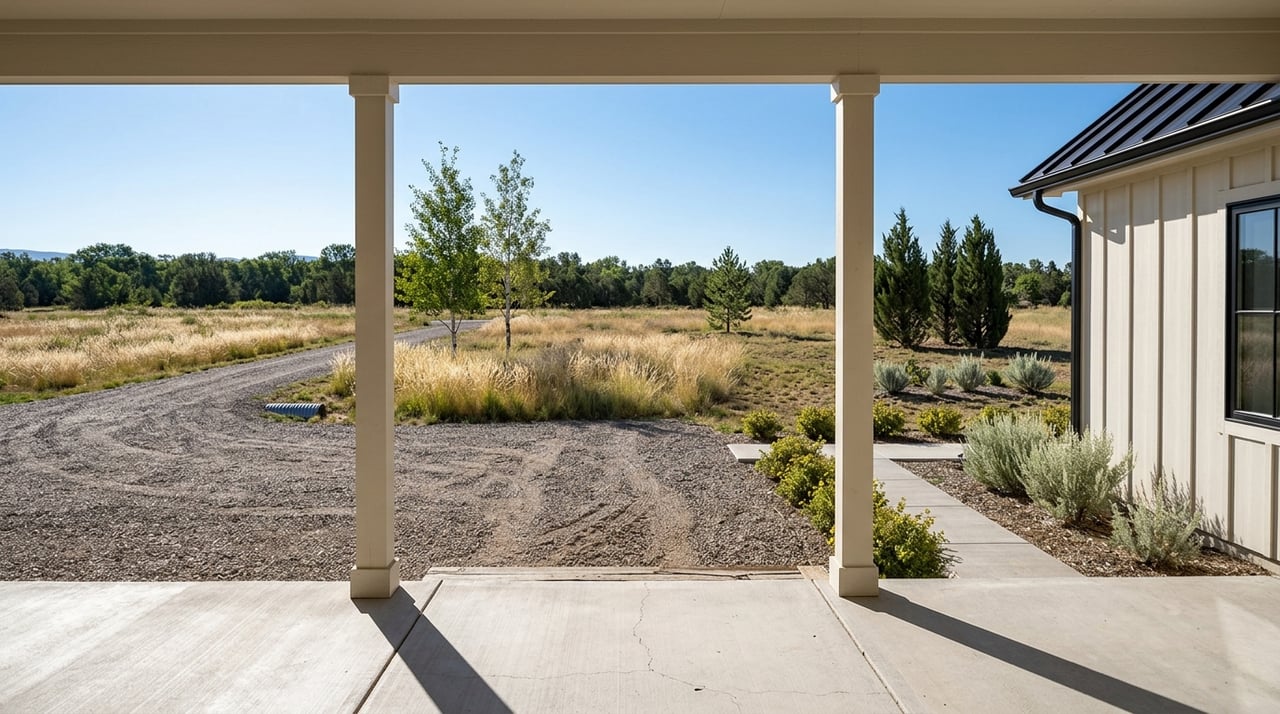
Buying Land And Rural Acreage Near Evanston, WY
June 25, 2026
June 25, 2026
Looking at land near Evanston can feel exciting right up until the questions start piling up. Can you build on it, reach it year-round, drill a well, install septic, or divide it later? If you want rural space without costly surprises, it helps to know what to check before you buy. Let’s dive in.
If you are searching for room to build, keep animals, invest, or simply enjoy more space, the Evanston area offers a mix of opportunities. Parcels near Evanston also benefit from strong regional access, including proximity to I-80, routes such as WY 89 and WY 150, and Union Pacific freight service in the region.
That said, rural land is not a one-size-fits-all purchase. A parcel inside Evanston city limits may follow a very different set of rules than land in unincorporated Uinta County, so your first step is figuring out which jurisdiction controls the property.
Before you think about a floor plan or fencing, confirm whether the parcel sits inside Evanston city limits or in unincorporated Uinta County. Evanston handles its own zoning, planning, variances, conditional uses, and land subdivision within the city.
In unincorporated areas, Uinta County land-use rules apply to private land. That matters because permitting, setbacks, septic, access, and use approvals can all look different depending on the parcel location.
One of the biggest land-buying mistakes is assuming that because you can physically drive to a parcel, you have legal access. Uinta County specifically warns that some roads serving private parcels are not county-maintained, and deeded, recorded access easements may be needed when access is unclear.
If you need a new driveway or entrance onto a county road or county right-of-way, Uinta County requires an Access Permit. The county limits proposed access widths to 24 feet for agricultural or residential uses and 40 feet for commercial, industrial, or subdivision roadways.
Separate permits may also be required for work in the county right-of-way. County road officials can add stipulations to that work, so it is smart to verify road access details early instead of waiting until after closing.
Fence lines can be misleading on rural property. Uinta County states that a survey is the only way to confirm property lines, and fences should not be treated as reliable evidence of boundary location.
This is especially important if you plan to build, install a driveway, place a well, or set up fencing for animals. A survey can help you understand what you are actually buying before you invest in improvements.
Not every piece of land is automatically ready for construction. Uinta County says a parcel generally must have been created under subdivision rules, predate those rules, or qualify under an approved exemption before county permits are issued.
That single issue can affect your entire plan. If you are buying land with the goal of building a home, shop, or other structure, ask early whether the parcel is recognized as legal for development.
Future flexibility matters for many acreage buyers. Uinta County’s subdivision rules do not apply to parcels 35 acres or larger, but parcels created through family exemptions under 5 acres may not be divided further without a subdivision permit.
If your long-term plan includes splitting land for resale, family use, or investment, you should review that possibility before you close. A parcel that looks flexible today may come with important limits.
Land value often comes down to what you can actually do with it. In Uinta County’s Agriculture/Resource Development district, a Use Certificate is required for all new construction or alteration of any residence or business, and also for any farm structure over 2,500 square feet.
The county notes that routine grazing and crop production may not require a Use Certificate, but building or changing the use can still trigger approvals. Depending on your plan, you may also need a zoning map amendment, driveway access permit, small wastewater permit, land use certificate, or other approvals.
Conditional uses are not automatic in Uinta County. They must be approved by both the Planning Commission and the Board of County Commissioners.
County or city approval is not always the only layer. Uinta County notes that many subdivisions and planned developments have covenants that can restrict how land may be used.
Even if the zoning appears to fit your goals, private covenants may affect building style, land use, animals, outbuildings, or other improvements. That is one more reason due diligence matters before you commit.
Water can be one of the most misunderstood parts of a Wyoming land purchase. Wyoming treats natural waters as state property under prior appropriation, and the State Engineer’s Office says a permit is required before drilling a well.
Uinta County also cautions buyers that owning the surface does not always mean owning the water connected to the property. If a stream or irrigation ditch crosses the land, the related water rights may not match surface ownership.
Wells and pumps must be handled by Wyoming-licensed contractors unless a narrow exception applies. If a well is part of your plan, confirm both the permit path and the practical site layout before you buy.
Many rural parcels outside city service areas will need an on-site wastewater system. Uinta County requires a Small Wastewater Permit for construction, installation, or modification of small wastewater systems.
The county process includes percolation testing, a permit application with a design layout, inspection before backfilling, and final permission to backfill. Systems must be installed by a licensed installer, though the county says property owners may install their own under county guidance.
Setbacks also matter. Under county land-use rules, structures, wells, and small wastewater systems must be at least 20 feet from a county road right-of-way, and wells and small wastewater systems must also be at least 10 feet from property, easement, or right-of-way lines.
In Uinta County residential standards, lots with private on-lot water and septic must be at least 1 acre net per dwelling unit. Lots with either community water or community sewer must be at least 1/2 acre net per dwelling unit, and smaller lots require both community water and community sewer.
That means your building plan is tied closely to utility setup. A parcel’s size may seem workable at first glance, but the actual utility arrangement can change what is possible.
If a parcel is inside Evanston city limits, city utility services include water, wastewater, sanitation, landfill fees, and stormwater fees. Outside the city, do not assume the same level of service is available.
For rural parcels, utility access should be checked property by property. Uinta County also warns that utility lines may need to cross other land, electric service may not be available in every configuration, and outlying areas can be more prone to outages.
Land near streams, waterways, and other bodies of water may come with added review. Uinta County identifies flood hazard areas along these features, so floodplain status should be part of your due diligence if the parcel is near water.
A beautiful site is not always a simple site to build on. The best time to study constraints is before you buy, not after you are already designing a home or budgeting for improvements.
In Wyoming, mineral rights can be severed from surface ownership. Uinta County advises buyers to review the deed because mineral-right owners may have the right to extract minerals even if that changes surface conditions.
This can be a major issue for buyers who expect full control over the land. If mineral rights matter to your decision, ask for clarity during the purchase process.
Some buyers hope acreage will automatically receive agricultural tax treatment, but Uinta County says classification depends on land use, not just location. The assessor classifies property types, and agricultural land is assessed on productivity capability under normal conditions.
If that classification is important to your budget or ownership goals, verify how the land is currently classified and what factors may affect that status going forward.
Land financing and build financing often have more moving parts than a standard home purchase. If you are considering a USDA Rural Development loan path, qualifying borrowers may have a no-money-down option in eligible rural areas, but final property eligibility is determined after a complete application is submitted.
That means you should talk with your lender early about the parcel, your intended use, and whether your build plan fits the program guidelines. Waiting too long can create delays or force you to pivot mid-transaction.
Before you buy land or acreage near Evanston, make sure you have answers to these basics:
Buying land is part real estate search and part research project. The right parcel can be a great fit, but only if the legal access, utility plan, use restrictions, and permitting path match what you want to do.
That is where local experience helps. When you are comparing acreage near Evanston, having someone who understands Uinta County process, local parcel patterns, and the practical side of rural property can save you time and help you avoid preventable mistakes.
If you are thinking about buying land or rural acreage near Evanston, Britany Erickson can help you evaluate options, spot the right questions early, and move forward with confidence. Text or call Britany at (307) 799-8096 to discuss your next move.

Prime Campgrounds for Your Next Outdoor Adventure.

These Are Ideal Options for Families Dining Out in Evanston.

What to Accentuate and Promote When Selling in Wyoming.

The Strategies and Qualities to Seek in a Competent Agent.

Your Guide to Skiing Near Evanston, Wyoming, From Park City Slopes to Uinta Trails.


Turning a Full Inbox of Offers Into the Right Decision.
Experience seamless real estate transactions with Britany Erickson. From buying to selling, Britany's commitment to exceptional service ensures a successful outcome. Trust in her local knowledge and expertise to simplify your real estate journey and maximize the value of your investment.