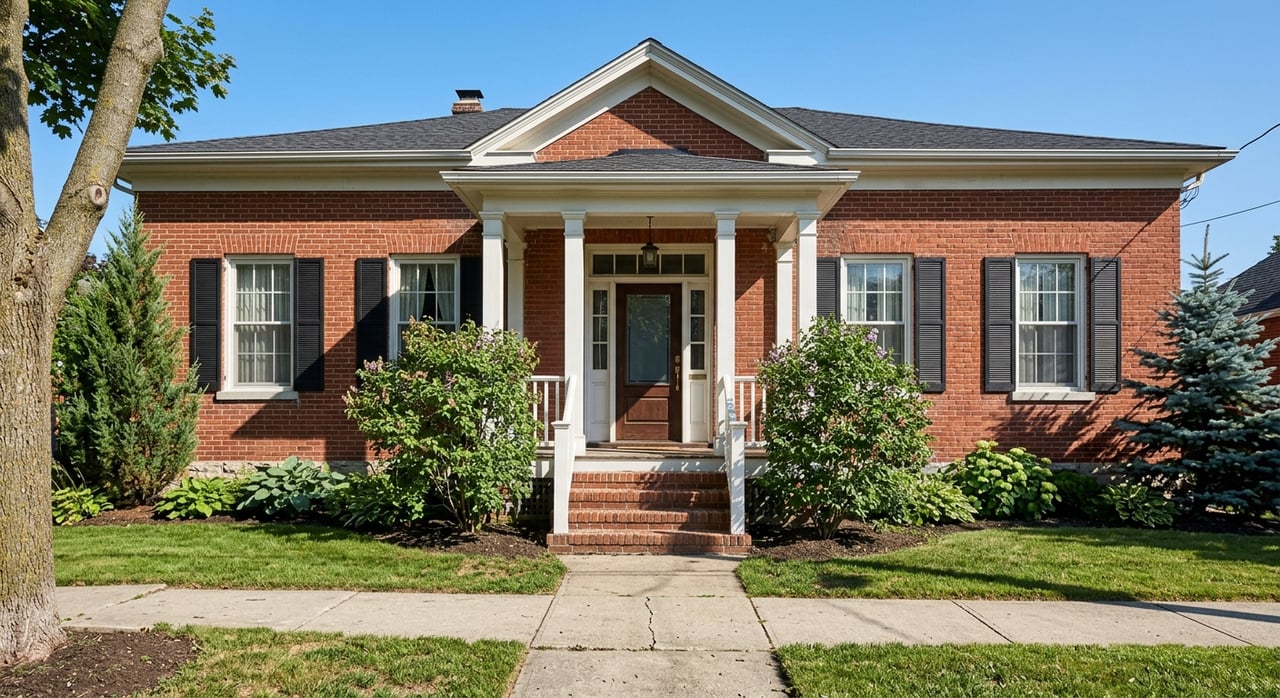
Living In Downtown Evanston's Historic District
May 14, 2026
May 14, 2026
Wondering what it’s really like to live in Downtown Evanston’s Historic District? That question matters because this part of town is not a typical residential neighborhood with block after block of houses. If you are drawn to history, walkability, and a downtown setting with real local character, this guide will help you understand what to expect and where the best fit may be. Let’s dive in.
Downtown Evanston’s Historic District is best described as the city’s historic core. It developed around the arrival of the Union Pacific Railroad in 1868, when the depot, roundhouse, and machine shop helped make Evanston a permanent stop along the line.
The district is roughly bounded by Center, 9th, 11th, and Front streets. It includes about sixty buildings and was added to the National Register in 1983. Most of those buildings are commercial, with a smaller number of governmental and residential structures.
That distinction is important if you are home shopping. This area is not a traditional neighborhood made up mostly of single-family homes. Instead, it is a mixed-use historic center with nearby residential areas that carry much of the district’s historic-home appeal.
One of the most unique things about downtown Evanston is how closely it still relates to the rail corridor. The city was originally platted so the main streets ran toward the railroad tracks instead of following standard compass points.
That layout still shapes the experience of being downtown today. The result is a compact, connected area where the train depot, roundhouse, streetscape, and public spaces feel tied together rather than spread apart.
If you like places with a strong sense of origin, this setting stands out. Downtown Evanston feels like a place that grew from real economic and civic history, not from a later master plan.
The district’s architecture is mostly late-19th- and early-20th-century commercial brick construction. As you walk through downtown, you will see features like display windows, transoms, recessed entries, iron fronts, pilasters, cornices, brackets, and brick parapets.
That gives the district a distinct historic look without feeling overly formal. The visual character is shaped more by storefronts and civic buildings than by rows of houses, which is one reason the area feels different from many other small-town historic districts.
Only a few earlier storefronts may be categorized as Italianate. Overall, the district reads as a practical, railroad-era downtown with preserved architectural detail and a strong brick-built identity.
This is one of the biggest questions buyers tend to have, and the answer is simple: the historic district is mostly commercial. According to the National Register nomination, only two houses sit within the district boundaries.
So if you picture a classic residential neighborhood in the center of the district, that would not be fully accurate. Most of the residential character is found on the edges of downtown and in nearby surrounding blocks.
That does not make the area less appealing. It just means your housing search may focus on properties near downtown rather than directly inside the district itself.
If you love older homes, the strongest residential story begins around the edge of downtown. One standout example is the Quinn House, now known as Pine Gables, at Eleventh and Center on the edge of the district.
The National Register form describes it as one of Evanston’s older and larger Victorian homes with Queen Anne elements. It helps show how downtown’s historic character extends beyond storefronts into nearby residential areas.
Local railroad history also gives useful context for nearby housing patterns. Homes along Main Street facing the Roundhouse and Railyards were built between 1895 and 1910 for railroad workers, while larger homes higher on the hill in the historic residential district belonged to engineers and company officials.
For buyers, that means the best fit may be a home near downtown that gives you access to the district’s walkable lifestyle while still offering a more conventional residential setting.
Living near Downtown Evanston’s Historic District is about access and atmosphere. You are close to a compact downtown where historic buildings, public spaces, and local businesses shape the rhythm of daily life.
Depot Square is the clearest example. It began in 1983 and spans three blocks in the heart of downtown, bringing together the Union Pacific Depot and plaza, the Carnegie Library and Uinta County Museum, the Chamber of Commerce, the Wing Family Chinese Gazebo and Garden, the Joss House Museum, the Beeman-Cashin Building, Martin Park, and other public-space features.
This is also where community activity becomes visible. The city notes that Depot Square hosts festivals, weddings, farmers markets, and other celebrations, which adds to the area’s active small-town feel.
If walkability matters to you, this part of Evanston offers one of the clearest opportunities for it. The Historic Train Depot sits in the heart of downtown on Front Street, and the Roundhouse and Railyards are only two blocks away.
That close spacing helps create a downtown that feels easy to navigate on foot. You can move between landmarks, public gathering spaces, and local businesses without needing to cover long distances.
Visit Evanston’s downtown information also points to a broad mix of day-to-day options, including restaurants, brew pubs, bars, coffee, a deli, a steakhouse, and shops for gifts, home décor, beauty, and crafts. The area also includes attractions and events like the Strand Theater, a farmers market, a car show, and Brewfest.
Downtown Evanston’s Historic District tends to appeal to buyers who care more about character and location than uniformity. If you enjoy older architecture, a railroad-town story, and the ability to be near a traditional main street, this area may feel like home.
It can also appeal to buyers who want a small-town downtown lifestyle instead of a newer subdivision feel. Some people are especially drawn to the idea of being near public events, local businesses, and preserved historic landmarks.
At the same time, this setting is usually a better fit for people who understand what comes with older properties and historic areas. If you prefer brand-new construction and a more typical residential layout, you may want to compare nearby neighborhoods as well.
Historic character is not just about appearance. It can also affect how exterior improvements are approached.
The city describes downtown preservation as a process that includes adaptive reuse, facade renovations that are appropriate to the district, a cooperative design review process, and technical assistance to property owners. That means exterior projects are part of the conversation if you own property in or near the historic core.
For some buyers, that is a plus because it helps preserve the area’s visual identity. For others, it is something to plan for so expectations are clear before making a move.
There is a lot to like about this part of Evanston if it matches your priorities.
It is just as important to know what this area is not. That helps you make a confident decision.
If you go into your search with those points in mind, you are much more likely to find the right fit.
If you are interested in this part of Evanston, start by widening your focus beyond the exact district boundary. Some of the best opportunities may be on the surrounding blocks where you still get the downtown feel with more residential options.
It also helps to think clearly about your lifestyle. Ask yourself whether you want to be close to downtown amenities, whether you enjoy the upkeep and charm of older properties, and whether a mixed-use setting fits how you want to live.
A local guide can help you compare homes near downtown, explain how the area functions block by block, and identify options that match your goals. That kind of insight matters in a place where historic identity and residential patterns do not always line up in obvious ways.
If you are thinking about buying, selling, or investing near Downtown Evanston’s Historic District, Britany Erickson can help you understand the local market and find the right property for your next move.

Prime Campgrounds for Your Next Outdoor Adventure.

These Are Ideal Options for Families Dining Out in Evanston.
What to Accentuate and Promote When Selling in Wyoming.
The Strategies and Qualities to Seek in a Competent Agent.

Your Guide to Skiing Near Evanston, Wyoming, From Park City Slopes to Uinta Trails.

Turning a Full Inbox of Offers Into the Right Decision.
Experience seamless real estate transactions with Britany Erickson. From buying to selling, Britany's commitment to exceptional service ensures a successful outcome. Trust in her local knowledge and expertise to simplify your real estate journey and maximize the value of your investment.